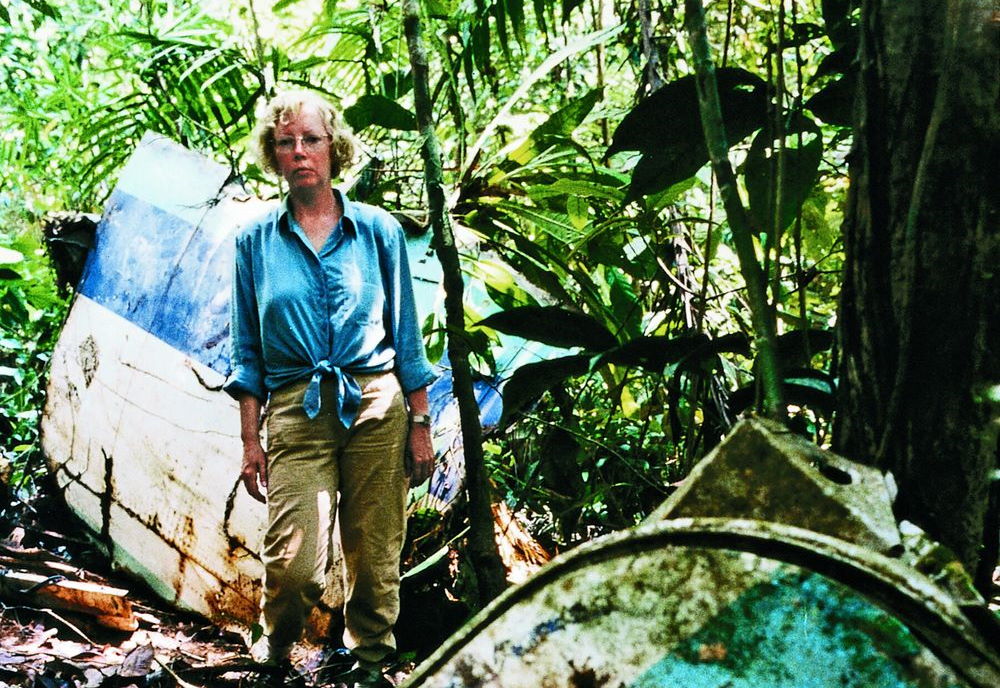
Juliane Koepcke fell two miles from the sky directly into the Amazon rainforest, still strapped to her seat. She was seventeen years old, wearing a small green dress and one sandal. She survived the fall, spent eleven days walking alone through the thick jungle, and made it out alive.
Her story is one of the most incredible tales of human survival ever recorded. While ninety-one other people died on LANSA Flight 508, Juliane walked out of the trees with a broken collarbone, a bad eye injury, and a deep cut on her arm. Here is how a teenager used pure grit and her father's simple advice to stay alive when everyone else was lost.
The Lightning Strike Over the Amazon
It was Christmas Eve in 1971. Juliane and her mother, Maria Koepcke, were flying from Lima to Pucallpa in Peru. They wanted to join Juliane's father, Hans-Wilhelm Koepcke, at a remote research station in the rainforest. The family had lived in Peru for years, studying animals and plants deep in the woods.
about mid-day, their Lockheed L-188 Electra plane flew into a dark, violent storm. The air got so bumpy that Christmas presents fell out of the overhead bins. Drinks spilled everywhere. Then, a sharp flash of white light hit the right engine.
Juliane remembered her mother saying one quiet sentence: "That is the end, it is all over." Seconds later, the plane split apart in the air. The noise was terrible, and then everything went black. Juliane lost consciousness as she plunged toward the dense green canopy miles below.
She woke up the next morning, on Christmas Day. She was lying on the wet ground under the heavy forest trees. Her seat had landed in the thick branches, which cushioned her hit just enough to save her life. Her right eye was swollen shut, her collarbone was broken, and her knees were badly scraped. But she was breathing.

Using Real Rainforest Survival Skills to Stay Alive
Juliane did not panic. Her parents were famous wildlife experts, and she had spent two years living with them at their station named Panguana. She knew what the jungle could do to a person, but she also knew how to read it. Her father had given her one key rule for getting lost in the wild: always follow water.
She found a tiny trickling stream near her crash site. A small stream leads to a creek. A creek leads to a river. And people always build their homes near big rivers. If she kept her feet in the water, she would eventually find help.
Her main problem was food and clothing. She had lost one sandal in the fall, leaving her with one bare foot. Her thin dress was torn. All she had to eat was a single bag of hard candies she found in the dirt near her seat. She did not find any other living people, and she knew she could not stay near the wreck waiting for help that might never see through the trees.
Walking through the water was hard, slow work. Rays and stingrays sat hidden on the muddy bottom of the streams. Poisonous snakes slipped through the wet leaves on the bank. Juliane used her single sandal to test the ground ahead of every step. If something was hidden in the mud, her shoe would hit it first.
The heat was severe during the day, and rain poured down at night. Mosquitoes bit her constantly, making it impossible to sleep. Maggots began to hatch inside the open wound on her arm. She remembered how her father once treated an infected dog, so she tried to scrape them out with a small stick, but it was painful and did not clean the cut completely.
Walking Eleven Days Through the Peruvian Jungle
By the fourth day, Juliane heard the sound of rescue planes flying high above the trees. But the forest canopy was so thick that the pilots could not see her tiny green dress. She could not see them either. Soon, the sound of the engines faded away. She knew she was completely on her own.
She kept walking downstream, swimming when the water got too deep for her feet to touch bottom. The river grew wider and faster. Piranhas lived in these waters, but her father had taught her that piranhas usually only attack dead or bleeding animals in stagnant water. As long as she kept moving in the flowing current, she was safe from them.
Her bag of candy ran out around the fourth day. After that, she drank only muddy river water. She saw wild animals, bright frogs, and huge spiders, but she did not touch them. She knew that in the rainforest, bright colors often mean deadliness.
By the ninth day, Juliane was very weak. Her skin was sunburned and covered in bug bites. She had lost track of time and was floating down a wide river named the Shebonya. She could barely stand up on the rocky shores. If you want to read more about true survival journeys, check out these unbelievable real survival stories from around the world.
On the afternoon of the tenth day, she saw something that looked like a dream. A wooden boat was tied to the river bank. Right behind it was a small wooden hut with a leaf roof. She crawled inside, but it was empty. There was an outboard motor sitting in the corner, with a small tank of gasoline next to it.
The Gasoline Fix and the Rescue
Juliane remembered another trick her father used on farm animals. She poured gasoline directly onto the open cut on her arm. The pain was awful, but the fuel forced thirty-five maggots to crawl out of her flesh. She cleaned the cut as best she could and fell asleep on the dirty floor of the hut.
The next morning, three Peruvian lumberjacks walked into the shelter. They were shocked to see a young, pale white girl covered in mud, blood, and gasoline sitting in their quiet camp. At first, they thought she was a water spirit from local legends.
Juliane spoke to them in fluent Spanish. She told them who she was and what had happened to her plane. The men were gentle and kind. They gave her sweet food to eat, washed her wounds, and put her in their boat. They rowed her down the river for seven long hours to a small town called Tournavista.
From Tournavista, a local pilot flew her to a hospital in Pucallpa. Her father was waiting there. When he saw his daughter walk through the door, they held each other and cried. Juliane was the only person out of ninety-two passengers and crew to survive LANSA Flight 508.
How Juliane Built a Life After the Amazon
The recovery was slow and painful. Doctors had to clean her injuries, and it took months for her body to heal. But the emotional pain was even harder. Her mother had survived the initial crash too, but died of her injuries in the forest days before anyone could reach her. Juliane carried that weight for years.
Instead of running away from the wild, Juliane decided to face it. She went to college in Germany and studied biology, just like her parents. She returned to Peru many times to conduct scientific research in the very same jungle that almost took her life. If you love long-form accounts of history, you can explore more amazing true historical accounts online.
She eventually took over management of the Panguana research station her parents built. She turned it into a protected nature reserve to keep the forest animals safe from logging. She wrote a book about her life called When I Fell From the Sky, sharing her full story with readers across the world.
Many people study how humans react in extreme situations. You can learn more about Survival skills to understand how simple knowledge makes the difference between life and death. You can also read about how stories like this are preserved through a Human-interest story that keeps real events alive for generations.
What We Can Learn From Juliane's Fight
Juliane Koepcke survived because she stayed calm, remembered simple rules, and kept moving forward one step at a time. She did not try to fight the jungle. She listened to it and let the river carry her home.
When life throws you into a tough spot, remember her rule: find the stream, keep your feet moving, and trust that the water will lead you back to open ground. What simple rule helps you stay focused when things get dark?
Comments
Post a Comment