
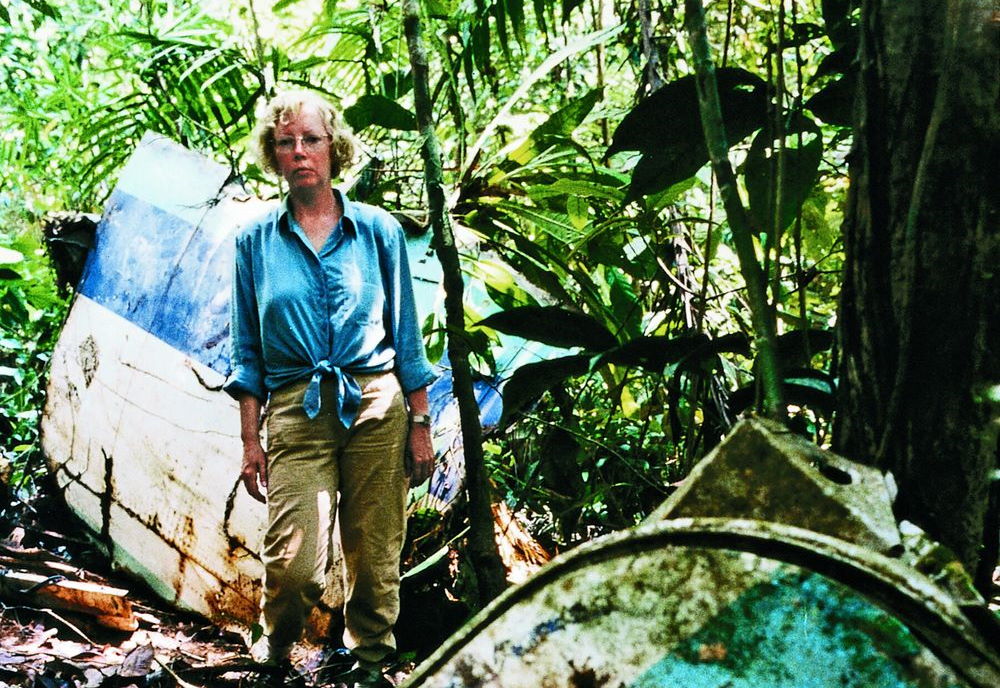
Juliane Koepcke fell two miles from the sky while strapped into her seat on Christmas Eve in 1971. She hit the thick leaves of the Peruvian jungle, survived the crash, and walked out alive 11 days later. She was just 17 years old.
Most people who fall from an airplane die long before they touch the ground. Juliane survived the fall with a broken collarbone, a bad cut on her arm, and one swollen eye. She used simple rules her father taught her to follow water downstream until she found help.
The Flight That Fall Apart Over the Rainforest
Juliane and her mother, Maria, got on LANSA Flight 508 in Lima, Peru. They wanted to fly home to Pucallpa to see Juliane's father, Hans-Wilhelm, for Christmas. The plane was a Lockheed L-188 Electra, and it had 92 people on board. The air was bumpy, but the flight was short, so no one worried at first.
About 30 minutes after takeoff, the plane flew right into a dark storm. Heavy rain hit the windows, and luggage fell out of the bins. Lighting struck the plane, and Juliane saw a bright flash over the right wing. Her mother turned to her and said her last words: That is the end, it is all over.
The plane went into a steep dive, and then it broke apart in mid-air. Juliane remembered hearing the roar of the wind, and then everything went black. She was still strapped to her row of three seats as she fell 10,000 feet through the dark sky into the dense green trees below.
Waking Up Alone in the Amazon Jungle
Juliane woke up the next day on Christmas morning. She was lying on the ground in a light cotton dress, missing one shoe and her glasses. Her left eye was swollen shut, and her head was spinning from a concussion. The row of seats had crashed into the thick tree canopy, which slowed her fall just enough to save her life.
She was completely alone in the jungle. She called out for her mother, but only the sounds of frogs and birds answered her. Her broken collarbone hurt with every breath, and she had a deep cut on her right calf. Yet, she stood up and started looking around the wet leaves.
She found a small bag of candy in the trash scattered nearby. That bag of sweets was the only food she would have for the next 11 days. She knew she could not stay near the crash site because the trees were too thick for rescue planes to see her.
Using Survival Skills Learned From Her Parents
Juliane was not a regular teenager. Her parents were famous zoologists who ran a research station in the jungle called Panguana. She had lived in the forest for over a year, so she knew how dangerous it could be. You can read more about survival skills and how people stay alive in wild places.
She remembered a key rule her father gave her years before. If you are lost in the jungle, find a small stream. Follow the stream to a bigger river, because people always build their homes near moving water. She heard the faint trickling sound of water nearby and walked toward it.
Juliane picked up a stick to test the ground ahead of her as she walked. The jungle floor was full of stingrays, snakes, and camouflaged frogs. She tapped the mud in front of her feet to scare away anything hiding in the leaves. She only had one shoe, so a single snake bite would have killed her.
The Long Walk Down the River
The small stream led her to a larger river called the Shebonya. Walking along the bank was hard because the bushes were thick and full of sharp thorns. Juliane decided it was easier to float in the middle of the river, even though she knew piranhas and caimans lived in the water. You can find more survival stories about ordinary people who made hard choices in the wild.
She floated downstream during the day, using her stick to push herself away from deep spots. The hot sun burned her bare neck and arms, turning her skin red and sore. At night, bugs bit her relentlessly, making it impossible to sleep for more than a few minutes at a time.
By the fourth day, her food was completely gone. She had swallowed her last piece of candy, and her throat was dry and sore. She tried to eat wild berries, but she remembered her father warning her that bright berries in the jungle were often poison. She chose to starve instead of risk eating something bad.
Fleshmaggots and the Fight Against Infection
By the ninth day, Juliane was weak and dizzy. Her arm wound had turned bad, and flies had laid eggs inside the open flesh. Dozens of small white maggots were eating her arm under her skin. The pain kept her awake through the long, humid nights.
She remembered seeing her father treat a dog with a bad wound years ago. He had poured gasoline into the sore to force the bugs out. Juliane knew she needed something similar if she wanted to keep her arm. She kept floating down the river, searching for any sign of human life.
On the tenth day, she spotted a small wooden boat tied to the bank. At first, she thought she was dreaming because her brain was so tired. She crawled up the muddy bank toward a small wooden shack with a palm leaf roof. Inside, she found a small motor and a can of diesel fuel.
Juliane poured the fuel directly onto her arm wound. The burn was terrible, but it worked. The maggots came out of her skin, and she pulled out 35 of them one by one with her fingernails. She then lay down on the dirty wooden floor and fell asleep.
How Local Lumberjacks Saved Her Life
The next morning, three Peruvian lumberjacks walked up to the shack. They were shocked to find a young white girl covered in mud, sunburns, and dried blood. They thought she might be a water spirit from local legends at first, but she spoke to them in clear Spanish. You can explore how local people share an oral history of real events across generations.
The men gave her clean water, fed her cassava roots, and washed her wounds. They spent seven hours paddling her down the river in their boat to a small village named Puerto Inca. A local doctor gave her basic treatment before a pilot flew her to a hospital in Pucallpa.
Juliane was reunited with her father in the hospital. He had spent days searching for her in helicopters, believing she was dead. She was the only survivor out of the 92 people on board LANSA Flight 508. The bodies of her mother and the other passengers were found weeks later scattered across the jungle.
Why Juliane's Story Still Astonishes Us Today
Juliane Koepcke survived a fall from two miles up, walked through the densest forest on Earth for 11 days, and beat severe infection without medicine. She was not a superhero, just a young girl who remembered her lessons and refused to give up. Stories like hers belong to a rare kind of human-interest story that shows how strong a person can be when everything goes wrong.
She went back to Germany, finished her school, and became a scientist just like her parents. She earned her degree in biology and returned to Peru many times to study bats. She even took over the management of the Panguana research station her parents founded.
In 1998, famous director Werner Herzog made a movie about her story called Wings of Hope. Herzog had almost booked a seat on the very same flight in 1971, but his reservation was canceled at the last minute. He walked through the jungle with Juliane to film the exact spot where her seat landed in the trees.
Juliane also wrote a book about her ordeal titled When I Fell From the Sky. She often said that the jungle saved her life just as much as it tried to take it. She learned to love the trees and the river, despite the trauma they caused her as a child.
Her story shows us that simple knowledge and calm decisions can keep you alive in the worst situations. Learn more about real survival tales from history to see how ordinary people tackle incredible odds.
What would you do if you found yourself alone in a jungle with no food or gear? The next time you walk near a small stream in the woods, think of Juliane and follow the water home.
Comments
Post a Comment